Sunday, 27 October 2024

BHAV-SPANDAN YOUTH FESTIVAL | 2024

Bhav-spandan Youth Festival 2024


Greetings! As per the tradition of every year, this year's Youth Festival was held in Maharaja Krishnakumarsinhji Bhavnagar University from the 17th to the 19th of October, starting with Kalayarta and concluding with the closing ceremony. This year, it was named the Bhav-spandan Youth Festival. This blog post captures my experience participating in various events and competitions, as well as attending my friend's competitions to cheer them up.


This year’s Youth Festival felt a bit hasty, with many competitions happening simultaneously. Due to this clash in timing, we were not able to attend all the events in person, especially theatrical ones like Mime, Skit, and Akanki. However, the festival was superbly managed, including efficient water and food arrangements, and the university even provided accommodation for daily commuters. Despite the excellent management, the time span was shorter compared to the previous youth festival. It's also worth noting that there was less participation in group competitions this year, with more students opting to enroll in individual events such as elocution, clay modeling, mono acting, on-the-spot painting, photography, and cartooning.


I participated in three events, all of them were group based, including Kalayatra, the Quiz competition, and Installation (creating the best from waste – Sthapankala). Every year, the Youth Festival kicks off with the Kalayatra competition, where various colleges and departments present different social themes in groups. Our theme was to represent the "Condition of Education" in present times, focusing on how students are negatively influenced by social media, reels, TikTok, and the increasing use of drugs among teenagers, which poses a threat to quality education. The Kalayatra started from Shamaldas Arts College and ended at Swaminarayan College. The themes of other colleges largely addressed contemporary issues like women's safety and rape.


The next day, various competitions began following the opening ceremony, where Kusum Sarvaiya and Jay Vaghani were part of the prayer group, and the formal welcoming of guests took place. Quiz and Mimicry were the first competitions. My classmate Divya Jadav, my junior Rutvi Pal, and I participated in the Quiz competition. This year's quiz wasn’t too difficult, but unfortunately, we couldn’t qualify or secure a rank. There were 25 questions, mostly about current affairs, with a few related to the constitution. Each correct answer earned 2 marks, while a wrong answer cost 1 mark. The top five teams would qualify for the next round.

Later that evening, I had my other group event, Installation. Yashraj Sodha, Rajdeep Bavaliya, Parthiv Solanki, and I participated. This was my first time participating in this event, and we had a lot of fun while learning. We had to collect materials that were no longer in use or considered waste and create something meaningful from them.

Here Are the List of Things: નારિયેળ ના છલા, કોથળા, Cardboard, Card sheet,
Newspaper, Magazine, Plastic Bottles (every size), Clothes, Dupatta, Sari, Tapes, Stepler, Glue, Needle Threads, 'Matlu' , Tel no Dabbo, Sticks( nani moti), Ball, Jewellery, Frames, થર્મોકોલ, પ્લાસ્ટી ડબ્બો, સાવરણી, લોખંડના તાર, ઘાસ નો પૂડો.

Themes of Installation

Worshipping (Pooja)

Happiness Emotion

Accident


This was our final composition, and we chose the theme of "accident." Our purpose was straightforward. First, we planned out what we needed to do and divided the tasks. As you can see in the picture, we attempted to create a train, and on the railway line, there are two people standing, one male and one female. This is an AI operated automatic train, and the accident is inevitable. It is up to the train to decide whom to kill and whom to save. Our concept was that the train would choose to kill the female and save the male. In this way, we aimed to represent gender bias in AI.

What was the error then? According to the judges, we were unable to do justice in the making of the automatic AI train. It didn’t even much resemble a train, as we had spent too much time thinking rather than taking action. Another issue was that the message of the artwork or installation should be immediately clear to the viewers at first glance. There’s no room for interpretation or confusion, but unfortunately, after seeing our composition, visitors were confused and couldn’t understand what we had made.


The other participants' structures were very uniquely crafted and executed. Most of them focused on themes like Pooja and Accident.


As you can see from above pictures the themes are clear. Students from Gujarati Department secured the first rank in this competition. They have constructed the idol of deity Ganesh, and the detailing was commendable.

My Experience/Themes in Dramatic Events


Theatre events are the heart of the Youth Festival, and many people from outside the university also attend these performances. There are mainly four types of drama events held at the festival: One-Act Play, Skit, Mono Acting, and Pantomime.

The titles of the various One-Act Plays were Jamni, Sukh-Dukh na Sathi (both based on Pannalal Patel's short story), Kariyavar, Kali – Ek Pavitra Rang, Aykha ni Chopat, and Karna.

This year's One-Act Plays covered mixed themes such as sentimentalism (in Jamni and Sukh-Dukh na Sathi), tragedy (Karna, Aykha ni Chopat), realism (Kali – Ek Pavitra Rang), and mythology in Karna. Many props were used in these plays, and the lighting and background music enhanced the performances.

Aykhani Chopat


The play's story was simple and clear, one brother kills his own brother for his wife. The sister-in-law, unaware of the truth, begins making preparations to marry him for the sake of her child. Throughout the play, the game of Chopat is significant and serves as the objective correlative of the story. Destiny is playing a game with the characters' lives, reflecting the brother's cunning plan for cold-blooded murder. It’s only at the end of the play that anagnorisis (the sudden discovery of the truth) occurs, when the sister-in-law realizes that her brother-in-law killed her husband.

Karna


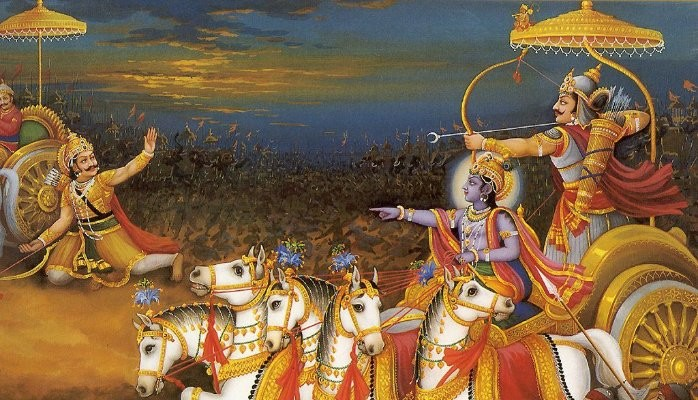
We recently studied the play The Curse of Karna by T. P. Kailasam, which presents the story of the Mahabharata from Karna's perspective. The play reveals how Karna's life was much like a curse, as he suffered at the hands of various characters, including the Gods. This play beautifully captures the tragedy of Karna, using lighting and a flashback narrative technique where a young Karna appears on stage to express his inner agony to Kunti, after she abandoned him and threw him into the river Ganga. The stage was also creatively used by the actors to depict the emotional distance between Karna and his mother, Kunti.

Skit


After many years, our department participated in the skit competition. The major themes in the skit were corruption, women’s safety, and comedy. Krupali Belam, Pallavi Parmar, Kusum Sarvaiya, Rutvi Pal, Smruti Vadher, and Bhumi Mahida participated in this event, while Jay Solanki was backstage providing tabla beats. The script was prepared under the guidance of Alpa Ponda ma'am. The skit addressed various contemporary issues such as the exploitation of corporate employees, and corruption in both politics and education.

Other Fine Arts Events


This section includes events like cartooning (Participant Riya Bhatt), painting( Participant Tanvi Mehra), collage (Participant- Reshma Bilakhiya), poster making (Participant- Sanket), clay-modelling(Participant- Bhumiba Gohil), and installation.

Cartooning


(By Riya Bhatt)

Paintings

Topics: College Campus, Garden, and Festival


Clay Modelling


(By Bhumiba Gohil)

Paper Collage

Topics: Fish Tank, Dancer and Portrait


Poster Making


Almost every poster incorporated the theme of ecocriticism, global warming, and tree plantation. And it is important to grow awareness about such topics in the minds of youth so that they can understand the worth of environment and ecology for sustainable green future.

Rangoli


Elocution


The topics for the elocution competition were: Mara Sapna nu Gujarat Kevu, Exams Every Day, Suicide: Is It the Final Solution?, India's Foreign Policy and Its Impact, and What If the Internet Disappeared? Many students chose the topics of suicide and Mara Sapna nu Gujarat. Dhatri Parmar also delivered her speech on the topic of suicide.

Here you can watch Dhatri's speech


This year students were very enthusiastic about all the events and competitions. We got substantial amount of participation this year in the youth festival from the Department of English. As many as twenty four students were participated in various eighteen competitions. But sadly this time we were not able to secure any rank. I am hopeful that next year our juniors will secure more medals.


Thank you.

Saturday, 12 October 2024

The Curse or Karna by T. P. Kailasam

Hello, in this blog I will be discussing about the play "The Curse or Karna" by renowned Kannada playwright T. P. Kailasam. This post is crafted as a thinking activity assigned by Megha Madam.


T. P. Kailasam, born on June 4, 1884, in Karnataka, was a famous Indian playwright, poet, and politician. Known for his sharp wit and humor, he contributed greatly to Kannada literature and theater in the early 20th century. His plays often addressed social issues and included political satire. He passed away on September 9, 1946.


The Curse or Karna


The play is divided into five acts and was first published in 1946. It was written with the influence of Sophocles' plays and tells the tragic story of Karna from the Hindu epic, the Mahabharata. Karna is often associated with charity and heroic deeds, and people tend to glorify his character. His role in the Mahabharata is significant, he is an ambiguous figure and a fierce rival of Arjuna. Despite all of this, Karna remains a marginalized and neglected character throughout the Mahabharata's narrative.

Many writers have since sought to highlight such overlooked characters from grand narratives, retelling their stories from different perspectives. Amish Tripathi and Chitra Banerjee are notable examples of such retellings. Similarly, Kailasam places Karna at the center of the narrative, and allows us to see the events of the Mahabharata from his perspective. In this play, we also observe the deconstruction of myth and narrative, as Kailasam portrays Karna's agony and suffering.


Interpret all the acts and scenes in brief.


Karna, an important character in the Mahabharata, was born to Kunti but raised by a charioteer. Although he was a great warrior, he faced rejection because of his low social status. He learned warrior from Parashuram by pretending to be a Brahmin, but was later cursed to forget his skills at a crucial time. Karna was loyal to Duryodhana and fought against the Pandavas in the Kurukshetra war. Despite his courage, the curses and fate led to his defeat by Arjuna. Karna is remembered for his generosity and honor, making him a tragic yet respected hero.

In Act I, we see the Karna is leaving the ashram of Raama (Parshurama). He is originally a Kshatriya, disguised himself as a Brahmin to learn battle tactics under the strict Brahmin teacher Parashuram. He excelled as a student, mastering divine weapons and archery. One day, while Karna was with Parashuram, a bee stung him, causing immense pain. Karna endured silently to not disturb his guru, but when Parashuram saw the blood, he realized Karna's true identity. Angered by the deception, Parashuram cursed Karna that he would forget his divine weapon skills when he needed them most in battle. This curse later played a crucial role in Karna's fate during his duel with Arjuna. This major incident of Brahmin's curse is covered in the first act. And the act ends with the lines. 

POOR KARNA...POOR...POOR KARNA.


ACT II


This act opens in the royal stadium at the Hastinapur. Both Karna and Arjuna are facing off with each other and shows their prowess of archery. In this also Karna has to face several discrimination because of his lowly birth at the hand of Bheemasen.  


Act III


The Paanchaala Princess is holding a contest for suitors to win her hand by shooting at a target's shadow. Karna, also called Anga, impresses everyone by easily bending a steel bar into a bow. But when the Princess finds out he comes from a low background, she angrily says she can't marry a "sootha’s son." Hurt and embarrassed, Karna freezes and then leaves the contest. This shows the conflict between his great skills and the prejudices of society. The scene highlights themes of pride, shame, and how social status affects people.


Act IV


This scene takes place in Karna's tent on the battlefield of Kurukshetra. It reflects on the aftermath of Draupadi's humiliation during the dice game, but with a new twist. Karna tries to defend Draupadi but can't because of a curse placed on him, showing his noble character despite past conflicts. 

Draupadi gives a powerful speech, calling herself a "flame of hate" born to destroy the Kuru family. The scene gives the complicated relationships between the characters from the Mahabharata, especially between Karna and Bhima. It ends with a touching moment where Bhima understands Karna's true nobility and the sadness of his situation. This moment hints at the eventual downfall of the Kuru dynasty and emphasizes the moral complexities of the characters in the epic.


Act V


On the battlefield, Anga and Maadra are tense, with Maadra urging Anga to start the fight. Anga realizes he has been more focused on his skills than his duty to the Emperor. Despite Maadra's advice to aim for Arjuna's chest, Anga hesitates, remembering how Krishna saved Arjuna before. Frustrated, he refuses to use his serpent arrow again and instead declares his intention to defeat the enemy with a simple blade of grass, which worries Maadra about Anga’s mental state.


As the battle continues, Krishna pushes Arjuna to use his powerful arrow to finish it. Although Arjuna feels torn about attacking an unarmed foe, he decides to aim at Anga, tears in his eyes. He shoots an arrow that fatally strikes Anga, leading to sorrow and anger from Maadra and Aswattha. As Anga dies, he reflects on the curses that have followed him, while Maadra and Aswattha grieve their lost friend.

{I have taken help of chatbots to interpret these Acts}


Various themes found in “The Curse”.


Class Conflict and Caste 


The foremost theme of the play is class conflict, particularly between Karna and other characters. The first instance of this class conflict occurs at the very beginning when Raama curses Karna for not being of the Brahmin caste, despite having acquired warfare skills from him. Subsequently, Karna is humiliated for being born into the lower "Shudra" caste. Panchalee, the princess, also insults Karna in front of many people during the royal court. Throughout the narrative, Karna suffers simply because he is neither Kshatriya nor Brahmin by birth. The term "Shudra" is occurs throughout the play, highlighting how his implied identity affects him in various areas, such as education, marriage, and most prominently, royal lineage.


Curse 


The story of Karna revolves around various curses in the play and in the actual Mahabharata narrative. It begins with the Brahmin's curse that, whenever he is in need of his archery prowess, he will be unable to use it on the battlefield. Moreover, he is also deceived by God Indra, who comes in disguise as a Brahmin and requests Karna's armor, his ultimate protector. Karna must give it up because he is cursed by Mother Earth to fulfill any favor asked of him early in the morning. If we were to remove all the curses from Karna's life, his circumstances would be vastly different.


Friendship


One key theme in the play is friendship. Karna first meets Duryodhana during archery lessons in Hastinapura, where they are competing against Arjuna. Duryodhana sees Karna as a strong rival to Arjuna and wants to befriend him to weaken the Pandavas. When it’s time for Karna to announce his lineage, Duryodhana steps in to say that Karna is a king, offering him the title of King of Angas so he can compete with Arjuna. Karna accepts the title and becomes a loyal friend to Duryodhana, who asks for his "endless friendship" in return. This marks the beginning of their strong bond in the Mahabharata. 

"it is but my king I may think of none else 
O mother mine, as I die promise thee"

Even in the time of the revelation that he is one of the brother of Pandva that he is their brother, Karna does not betray him. 


Destiny 


"Hate me...almost hate me? kill me?
almost kill me? slay me? almost slay me 
why ever for? what ever have I done to you?


The quote expresses Karna's profound confusion and sense of injustice regarding the hatred and suffering he faces. He questions why he deserves such animosity, highlighting his feelings of alienation and the unfairness of his situation, particularly the curses that stripped him of his skills at crucial moments.

It also reflects his fatalistic acceptance of his tragic fate. The repetition of phrases about killing and slaying underscores his awareness of impending doom, illustrating his struggle with identity and loyalty as he navigates the complexities of his life and ultimately faces his destiny in battle.


Here you can watch the introductory presentation on this topic 


Thank you for visiting...

Saturday, 5 October 2024

Edgar Allen Poe: Tales of the Macabre

 Greeting form the other side, 


In the past few days, I have been reading Poe's short stories, and in this blog post, I will share my experience and review. This review is part of a book reading club initiated by the Library Committee of the Department of English at MK Bhavnagar University. In this series, I have previously written a book review of Hemingway's "The Old Man and the Sea".


American  writer and a poet Edgar Allan Poe is most famous for his haunting tales. He primarily wrote short stories, a few poems, and one non-fiction work. His short stories feature bone-chilling descriptions of atmosphere, old castles, and gothic elements, with his use of spooky imagery being both fitting and noteworthy. Poe's stories encompass various themes such as revenge, bloodshed, horror, adventure, secrecy, torture, the human psyche, madness, and insanity, among others. For this reason, he is known as the father of English short stories and the initiator of detective fiction. The most important aspect of Poe's stories is that they never allow you to disconnect from their gripping descriptions.


"why will you say that I am mad?"


Perhaps "The Tell-Tale Heart" is his most famous short story. This tale contains everything a horror story needs. After reading it, you might question the sanity of the narrator himself. Throughout the story, the narrator insists on his sanity by recounting how masterfully and cunningly he carried out the murder of the old man, simply because he could not stand the old man's  evil "vulture eye."


"I was never kinder to the old man than during the whole week before I killed him." 


Another unsettling aspect of Poe's writing is his casual treatment of things we find most frightening. He nonchalantly portrays a murder in the middle of the story. One moment, we are moving through the narrative with a sense of unease, and the next, we are confronted with the news of someone being dead.

"Yes, he was stone, stone dead"


Moreover, it seems that he was well acquainted with various myths and history. In his stories, he frequently references Greek and Roman myths, philosophical figures, and historical events, as well as his knowledge of Italian art. Although his language is direct, lucid, and appealing, he sometimes uses archaic words and vocabulary.

"There are chords in the hearts of the most reckless which cannot be touched without emotion."

The above lines reveal much about the characters in Poe's stories. There are individuals who seem reckless and carefree about everything in life, yet these people also possess passions, vulnerabilities, and deep-seated emotions that emerge during the most unexpected turns of events. Perhaps Poe aims to uncover these hidden, savage, and latent aspects of the human psyche in his stories.  


"The Fall of the House of Usher" is another uncanny and mysterious story about the frightening Usher house. This tale also explores the insanity of the narrator's friend, who owns the eerie mansion. The narrator visits his friend due to his ill health, and as you read, you feel as though you are the one transported to the Usher house in place of the narrator. You experience every bit of horror that unfolds within its walls. The moment the narrator makes his escape after witnessing the living corpse is a pinnacle of terror. In other stories like "The Black Cat" and "The Cask of Amontillado," Poe particularly compels us to question the sanity of the narrator, as well as his own, especially with the portrayal of living beings entombed within walls.


There are many other short stories to explore. I hope this blog would be helpful to you to get a brief overview about Edgar Allen Poe and his short stories.  


Thank you for visiting & I dare you to read Poe at midnight. 

Modern English Fiction | Material

Modern English Fiction and the Evolution of Modernity # Introduction Modern English Fiction should not be understood merely as fiction writt...