Saturday, 13 July 2024

Short Stories | R. K. Narayan

 Hello everyone, 


The name, R. K. Narayan is revered by many in the realm of Indian English Literature, and especially in genre concerning short stories. Narayan had given many enticing short stories during his literary career. He is most famous for his 'Malgudi Days', which contains many stories including most famous Swami and Friends. This blog is also based on two of his short stories, which are rather obscure than other famous one, which are 'An Astrologer's Day' and 'Crime and Punishment'. In this blog you will find some question and answers related to these two short stories. 


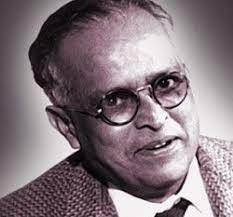
R. K. Narayan


R.K. Narayan, full name Rasipuram Krishnaswami Iyer Narayan Swami, was an Indian writer renowned for his novels set in the fictional South Indian town of Malgudi. Alongside Mulk Raj Anand and Raja Rao, he is considered one of the pioneering figures of early Indian literature in English, helping to introduce this genre to a global audience. His debut novel, "Swami and Friends," was published in 1935.


Narayan was mentored by the celebrated writer Graham Greene, who played a significant role in finding publishers for Narayan’s first four books. These included the semi-autobiographical trilogy of "Swami and Friends," "The Bachelor of Arts," and "The English Teacher." 


Narayan is also well-known for his works "The Financial Expert" (1951) and "The Guide," which won the Sahitya Akademi Award and was adapted into a successful Hindi film. He has often been compared to William Faulkner for his creation of a fictional town that reflected real-life, full of humor and the vibrancy of everyday life.


'An Astrologer's Day'


Q) How faithful is the movie to the original short story?

The short film we watched had captured the essence of what the story wants to convey, but while making such short documentary artists always takes some liberties in order to make it more enjoyable and interesting to watchers. Such case was with this short video as well. It has a few differences, which are listed below. 

  • The short story had given a bit deep description of the astrologer and his belongings, whereas in my point of view the short film is lacking in description of astrologer and his things. 
  • Secondly, in the short story there is a wife of astrologer but there is no mention of her name, but in the video she is referred as Usha. 
  • Moreover, the same thing is for his child, in the film astrologer has daughter named 

Q) After watching the movie, have your perception about the short story, characters or situations changed?

No, my perception about the story has not really changed about any of things. Being a short story there is not much room for alteration, except for minute changes in plot or that in characters. And one thing I want to add is that if astrologer after such long passage of time recognize Guru Nayak, then why don't Gurunayak fails to acknowledge astrologer.


Q) Do you feel ‘aesthetic delight’ while watching the movie? If yes, exactly when did it happen? If no, can you explain with reasons?

Yes, towards the end of the short story we can feel aesthetic delight. It happens when the astrologer reveals his long secret to his wife. At that time we feel sudden change of emotion. First we felt that how this astrologer knows so much about Guru Nayak, and his past. There is element of surprise in it, but it is in the later part that we came to know about the history between him and Guru Nayak. In their youth they had quarreled and in aggression astrologer had attacked on Guru Nayak with knife. This moment of revelation is aesthetic delight for me.


Q) Does screening of movie help you in better understanding of the short story?

Well, it is a simple short story, hence easy to understand even in first read. So, I have understood this short story in one go. But it is always welcome to watch such kind of adaptation movies, which adds one more layer of deep understanding about any literary work. 


Q) Was there any particular scene or moment in the story that you think was perfect?

Yes, there is this conversation between Guru Nayak and astrologer which is in my point of view is perfect or near perfect, because it captures the very gist of the short story and this story gets it tense turn from that point only. So, the heated argument between the astrologer and Guru Nayak is perfectly presented in the movie. 


Q) If you are director, what changes would you like to make in the remaking of the movie based on the short story “An Astrologer’s Day” by R. K. Narayan?

If I would be the director of film, then I would like to stretch a story a little at the end. Like Guru Nayak at the end recognizes the astrologer as his enemy, and Guru Nayak plotting for a revenge. This way this the story could be turned into a revenge story. 

Here you can watch the short film,


Crime and Punishment


This short story by R.K. Narayan explores the relationship between students and teachers. Despite being written ahead of its time, the story remains more relevant than ever in contemporary times. In the story, we encounter a notorious student who does not want to study and takes advantage of his parents, who have raised him in a very liberal atmosphere. The first instance of this is right at the beginning of the story when the teacher asks the student the answer to sixteen multiplied by three, a simple question. The student deliberately gives the wrong answer. The enraged teacher slaps the boy, and in return, the student threatens to tell his parents about the incident. The boy takes advantage of the situation, indulging in play and even forcing his teacher to play with him. The teacher fears that if the boy tells his parents about the incident, he might lose a student from his tuition.

At the end of the story, the boy's parents come to the teacher's house while the boy is playing in the garden. When the parents ask for an explanation, the teacher makes up a story, saying that the boy had studied all the sums and is now free to play. Instead of telling the truth, he decides to remain passive. Initially, this story seems to be didactic, and it is to some extent, but it has an open ending. There are no explicit moral values given by the author, rather, it is up to the readers to interpret the story in their own ways.


Role of Parents 

In this story, the role of parents is crucial, as all the actions are driven by the liberties they give their child. His parents provide him with excessive and unnecessary freedom, which leads to reckless behavior. The boy appears to be a pampered child. Whenever his parents meet his teacher, they lecture the teacher about child psychology. If they had genuinely studied what they were discussing with the teacher, it would be a different story. It seems that the parents have failed to instill good manners and morals in their child.


Role of Teacher


After all the inappropriate actions the student had done, his teacher does nothing. Although the teacher did slap the boy, he regretted it afterward. The teacher feared the grave consequences that might unfold if the student told his parents about this incident of violence, which was a genuine concern in my opinion. Ideally, the teacher should have informed the parents about the boy's misbehavior, but he refrains from doing so. Looking deeper into the matter, we see that the teacher is also not entirely at fault. If he had reported the student's behavior, there was a strong chance the student might withdraw from tuition.

Nowadays, teachers are often underpaid, even when they are well-versed in their subjects and have all the necessary qualifications. Teachers struggle a lot to make ends meet. We can assume the same situation for this teacher. To protect himself from a financial crisis, he chooses not to tell the boy's parents about his mischievous deeds.


Movies that Explore Student & Teacher Relationship


The Karate Kid (2010)


The movie portrays dynamics of student and teacher relationship. Protagonist Dre Parker a 12 years old boy who is not able to learn karate properly for which he was bullied at the school. He then sought the help of Mr. Han, a karate master in disguise of commoner. One day Parker was beaten by a group of boys. Afterwards, Dre asks Mr. Han to teach him kung fu so he can defend himself and gain respect in his new school. Mr. Han agrees to teach Dre but uses unconventional methods. He starts Dre's training with repetitive tasks like hanging up and taking off his jacket, which is boring for Parker. Unlike the relationship presented in Narayan's short story,  this bond between teacher and student is more strong, and marked by mutual care and respect. 


Taare Zameen Par (2007)


This is one of the most popular Hindi movie about student and teacher relationship, and construct an ideal image of the teacher. It is a story about a boy named, Ishan Awasthi who is not able to learn things smoothly like other children do, and for this reason he was constantly criticized by his father. Eventually he was sent to boarding house. His teacher Ram found out that boy is suffering form dyslexia, which affects the learnings of Ishan. His teacher helps him to tackle the situation.  


Wordcount: 1594
Images: 6
Video: 1


Thank you.

Wednesday, 10 July 2024

Poetry and Poststructuralism: An AI Powered Analysis

 Hello everyone, 


            This blog post is crafted in response to the lab activity given by Barad Sir. In this activity we have to generate an AI based poem and give them study material about the theory of deconstruction or post-structuralism in prompt to analyze the generated poem, and asked ChatGPT to do deconstruction of that poem.


Poem 1: The Book and the Cook


Within the pages of this treasured book,

Everything I thought is in the book.

But now I ponder, with a chef's delight,

What new food should I cook tonight?


Shall I blend spices in a fragrant stew,

Or craft a pie with berries, ripe and blue?

A roast, perhaps, with herbs upon its crust,

Or creamy pasta, in my skills I trust.


With every dish, a story to unfold,

In each new recipe, a tale retold.


Analysis with Three Step Model of Peter Barry  

To apply the deconstructive approach outlined in the passage to the poems "The Book and the Cook". We'll focus on identifying contradictions, shifts, breaks, and moments where language's reliability is questioned. Here’s an analysis based on the principles discussed.


Verbal Stage


Contradictions and Paradoxes: In "The Book and the Cook," the title itself sets up an expectation of exploration and discovery ("book") juxtaposed with creation and innovation ("cook"). The poem could be analyzed for paradoxical elements where these themes intersect or conflict.


Language's Unreliability: Explore how language constructs a reality of exploration (book) and creation (cook), yet simultaneously undermines these concepts through paradoxical statements or conflicting imagery.


Textual Stage


Shifts and Instabilities: Look for shifts in tone, imagery, or perspective between the idea of knowledge ("book") and creativity ("cook"). These shifts may reveal tensions or ambiguities within the poem's thematic structure.


Omissions and Absences: Consider what the poem doesn't explicitly state about the relationship between knowledge and creation. Are there gaps or silences that suggest underlying tensions or unresolved conflicts?


Linguistic Stage


Language's Adequacy: Question whether the poem itself suggests any inadequacies in language to fully capture the complexities of knowledge and creativity. Are there moments where language gestures towards something unsayable or unrepresentable?


Analysis According to Article (Click Here to Read Article)


To provide a more precise deconstructive analysis of "The Book and the Cook" with a focus on absent images and the power struggle between binary oppositions, we'll delve deeper into the poem’s imagery and the inherent tensions.


Absent Images and Their Significance


Absent Images of Finished Dishes


The poem speaks of "new food" to be cooked and lists potential dishes (stew, pie, roast, pasta) but never describes the final, completed meal. This absence emphasizes the process of cooking rather than the end product, suggesting that the act of creation is more important than the result. It implies an ongoing journey of discovery and experimentation.


Absent Diners or Audience


There is no mention of who will eat the food or share in the cooking experience. This absence might imply a solitary creative process, focusing on the individual's relationship with their craft. It also leaves out the communal or social aspects of cooking and eating, which could be a significant part of the culinary experience.


Absent Sensory Descriptions


While the poem mentions ingredients and dishes, it lacks detailed sensory descriptions of taste, smell, and texture that one might expect in a poem about food. This absence could suggest that the intellectual act of considering what to cook ("ponder, with a chef's delight") is as significant as the sensory experience itself.


Power Struggle Between Binary Oppositions


Knowledge vs. Creation (Book vs. Cook)


The poem sets up a binary opposition between the intellectual realm of the book (knowledge, tradition, thought) and the creative act of cooking (creation, innovation, action). The speaker transitions from reading/thinking to cooking/creating, highlighting a dynamic interplay where neither is fully dominant. The act of pondering what to cook suggests that knowledge informs creation, but creation also offers new insights, challenging the primacy of static knowledge.


Tradition vs. Innovation


The "treasured book" implies established knowledge and tradition. In contrast, the act of deciding "what new food should I cook tonight" represents innovation and the breaking of tradition. This struggle reflects the tension between adhering to known recipes and experimenting with new ones. The poem celebrates both the reverence for tradition and the excitement of culinary innovation, suggesting that true mastery involves a balance of both.


Control vs. Spontaneity


Reading a book is a controlled, structured activity where the content is predetermined. Cooking, on the other hand, allows for spontaneity and improvisation. The poem navigates this opposition by showing the speaker's trust in their skills ("in my skills I trust") to innovate within the framework of their knowledge. This tension highlights the fluid nature of creativity, which can thrive within the boundaries of structure while still allowing for freedom and unpredictability.


Intellectual vs. Sensory


The poem juxtaposes intellectual contemplation ("ponder") with sensory engagement ("fragrant stew," "berries, ripe and blue"). This opposition suggests a power struggle between the mind and the senses. By not fully describing the sensory experience, the poem may be elevating the intellectual over the sensory, yet it acknowledges the vital role of sensory elements in the creative process of cooking.


 Conclusion


The deconstructive analysis of "The Book and the Cook" reveals a rich interplay of absent images and binary oppositions, each contributing to the poem’s multifaceted meanings. The absent images underscore the poem's focus on the process of creation rather than its outcomes, and the power struggles between binary oppositions (knowledge vs. creation, tradition vs. innovation, control vs. spontaneity, intellectual vs. sensory) highlight the dynamic and fluid nature of meaning in the poem. This analysis underscores how the poem simultaneously constructs and deconstructs its themes, inviting readers to explore the complexities and tensions inherent in the act of creation.


Poem 2 :Elegy of Spring's Passing


In springtime's bloom, where life and colors blend,

Death whispers softly, as seasons swiftly mend.


Beneath the blossoms, where beauty takes its stand,

Lies the gentle touch of nature's guiding hand.


Though petals fall, and vibrant hues may fade,

New life emerges from the earth where they're laid.


Amidst the cycle, where endings softly sing,

Death in springtime is but a fleeting thing.


Analysis With Three Step Model of Peter Barry


Verbal Stage


Contradictions and Paradoxes: The title "Elegy of Spring's Passing" inherently contains a contradiction between the mourning of spring's end (elegy) and the celebration or acknowledgment of its natural cycle (passing). Look for other paradoxical statements within the poem regarding the themes of life, death, and renewal.

Language's Unreliability: Explore how language portrays the fleeting nature of spring and the inevitable passage of time. Are there instances where the poem's language struggles to convey the full emotional or sensory experience of spring's passing?


Textual Stage


Shifts and Instabilities: Identify shifts in imagery or perspective that reveal tensions between the transience of spring and the desire for permanence or continuity. These shifts may occur in temporal references, sensory descriptions, or emotional tones.

Omissions and Absences: Consider what the poem leaves out or doesn't explicitly address about the themes of spring's passing. Are there gaps in narrative or imagery that suggest underlying uncertainties or unresolved questions?


Linguistic Stage


Language's Adequacy: Examine instances where the poem reflects on the limitations of language to capture the essence of spring's beauty or its melancholic passing. Are there moments where language gestures towards ineffability or the inadequacy of words to fully convey meaning?


Conclusion

In this poems, applying the deconstructive approach reveals layers of complexity, contradictions, and moments where language itself becomes a site of exploration. By focusing on verbal paradoxes, textual shifts, and linguistic uncertainties, we uncover deeper meanings and thematic tensions that challenge conventional readings. This method underscores how poetry can simultaneously construct and deconstruct its own meanings, inviting readers to engage critically with its layers of significance.


Analysis According to Catherine Belsey's Method


Isolation of Images and Associations: "Elegy of Spring's Passing" isolates images of spring's beauty (flowers, renewal) and juxtaposes them with the inevitability of loss (passing, death). These images are heightened in their poetic form, distancing them from their natural contexts and emphasizing their symbolic resonance.


Role of Rhythm and Semiotics: The poem's rhythm and lyrical qualities ("majesty and burning," "deep with the first dead") create a sense of elegy and mourning, where language's musicality enhances its emotional impact. The semiotic dimension here suggests a primal response to the beauty and transience of nature, beyond rational discourse.


Deconstructive Perspective: Deconstructively, the poem challenges traditional binaries (life vs. death, beauty vs. decay) by intertwining them in poetic language. It invites readers to question the stability of meanings associated with seasonal cycles and mortality, emphasizing the fluidity and ambiguity inherent in human perceptions of nature.


Conclusion

"Elegy of Spring's Passing" demonstrate how poetry uses language to isolate images, create associations, and evoke emotional and conceptual resonances beyond literal meanings. Applying Kristeva's theory of the semiotic helps us understand how rhythm and poetic language disrupt conventional logic and invite a deeper engagement with the text's affective and symbolic dimensions. Deconstructive analysis enriches our understanding by revealing how these poems challenge fixed meanings and invite readers to participate in the construction of meaning through their engagement with language and imagery.


(All images are generated by Microsoft Copilot)


References


Barry, Peter. Beginning Theory, 3/E. Viva Books Private Limited, 2010.

Barad, Dilip, Deconstructive Analysis of Ezra Pound's 'In a Station of the Metro' and William Carlos Williams's 'The Red Wheelbarrow', Researchgate.net, Accessed 4 July 2024. 

Belsey, Catherine. Poststructuralism: A Very Short Introduction (Very Short Introductions). OUP Oxford, 2002.


Thank you.

Monday, 8 July 2024

What's in a Name ???

 Hello everyone, 

                       This blog task is crafted in response to the pre-thinking activity. In this blog I'll answer a few questions about the significance of the name in anyone's life. Why it is important to have a name? Click here for teacher's blog.


Q) What is your name? What is the meaning of it?

My name is Aakash, which is Gujrati name for Sky. So meaning of my name is simple which is 'Sky'.


Q) What qualities commonly linked with your name do you believe reflect your attributes?

The name Aakash is commonly assumed to have a big hearted person, who would be always happy and ready to help. I believe more or less these qualities are there in me, and it does reflect my attributes.


Q) Why do you think the name is important?

 I do think that name is important in anyone's life, because without name it would be difficult to communicate with others. In our society the name is our identity. These are some ways in which name becomes important identity, but sometimes I also believe that there is nothing in the name. Because I think that certain names gives some kind of illusionary power and ego to the person.


Thank you.

Friday, 5 July 2024

The Life and The Trial of "Sukrat"

Greetings, 

                This blog is prepared in response to the 'Sunday Reading Task' assigned by our professor on the topic of  'The Life and The Trial of Socrates.' In this task we have to do some reading, and to watch some of the videos on the life of Socrates, and craft a blog on the given topic. 


The Life of Socrates 


The great philosopher, and considered as the founding figure of  Western philosophy, Socrates or Sukrat in HIndi/Arabic was born somewhat around 399 BC in the Athens, a classical city of ancient Greek. He is  prominent figure in philosophy, and was also the mentor of bright minds like Plato and Xenophon. Socrates himself never wrote anything, but account of his life can be traced from the writing of his pupils Xenophon and Plato. He was not only a philosopher but also was a war veteran. There was constant conflict between Athenians and Spartans, which is also know as Peloponnesian War.


               We get to know more about Socrates from Plato's work "Apology". This work contains valuable information about the life and the trial of Socrates, as Plato himself was present at the trial of his mentor Socrates. Much of the content of work is in form of dialogue or conversation. He was not by any chance a handsome fellow, his nose and lips were big, and eyes were unattractive. In ancient Greek, those who have grasp over oratory skills and rhetoric was honored by all the people. Socrates was famous for his rhetoric questions and answers, which later developed as 'Socratic Method'. And for just asking questions to the people he was sentenced to death during his trial by giving Hemlock poison. 


"The unexamined life is not worth living"


Socrates and Rhetoric 


'I could spend my time testing and examining people there, as I do here as to who among them is wise'


Socrates was the strangest of the all philosophers. He has a tendency to question everyone and everything. He constantly asks questions until the listener get his answer without getting any actual answer from Socrates. As we have discussed earlier that he was serves as soldier in Peloponnesian War, in which Sparta emerged as victorious. They have abolished democracy of Athens and established feudalism, which is also known as the rule of 'Thirty Tyrants'. The conflict was started, they did not like the too much questioning of Socrates, and soon falsely laid charges against him as traitor and atheist, who by means of asking question corrupts the youth of Athens. Socrates was presented at the jury and his trial begun.


True Wisdom

'Human wisdom was relatively worthless, and his wisdom came in understanding this'


One famous anecdote about Socrates is that he was declared the wisest man in all of Athens by the Oracle of Delphi. Socrates believed this was not possible and started his expedition to find the smartest men in Athens. Socrates believed that he did not know anything, but one major difference between him and others was that Socrates knew he did not know anything, whereas others believed they knew something but, in fact, did not know anything. Socrates believed that true wisdom lies in recognizing one's own ignorance.

'To fear death, gentleman, is no other than to think oneself wise when one is not, to think one knows what one does not know.


The Trial of Socrates 


'That a good man cannot be harmed either in life or in death ,and that his affairs are not neglected by the gods'

After being accused of atheism, Socrates was presented against the jury. Socrates had all the chance to escape death but he did not do that. Instead, it seems that Socrates willingly accepted death. When jury asked Socrates about which punishment jury should give. He in rather humorous tone said that they should provide free meals in the party. This answer enraged jury and they sentenced him to death by giving him Hemlock poison. 


'It is not much difficult to avoid death, gentleman it is much more difficult to avoid wickedness for it runs faster than death'


Watch this video to understand more about Socratic Method, 


Thank you. 

Wednesday, 3 July 2024

How to Deconstruct a Text

Hello,

In this blog you will find my own brief understanding of Deconstruction Theory, and I will try to apply this theory to the three famous poem. 'Sonnet 18' by Shakespeare, 'In a Station of the Metro', and 'The Red Wheelbarrow' by William Carlos William.


Theory of Deconstruction


Jacques Derrida (1930-2004) was the one who initiated the theory of deconstruction through his seminal paper "Structure, Sign, and Play in the Discourse of Human Science". This includes looking at things from Post-Structuralism view point, in which they analyze the underline patters of various systems and institutions. According to Derrida, the whole world is governed by binaries, and everything can be explained through binary opposition. In which one binary is always privileged (which is Present) and remaining as other or  derivative or inferior (which is absent). For example binary of Man/Women, traditionally employs that men is superior to women, and women is being inferior or other, which lacks manliness. After getting inspiration from the deconstruction, modern feminist writers started to deconstructs the classical texts and rewrite the literary canon. Derrida believe that language essentially carries no meaning, it signifies nothing but chain of signifiers, which he called as free play of meaning. 


In deconstructing the text, we have to move beyond which is present and traditional meaning of text, and have to search for various other interpretations (free play of meaning). We have to question the primary meaning. 


How to do Deconstruct a Text


“language bears within itself the necessity of its own critique.”


Deconstruction of 'In a Station of the Metro'


The apparition of these faces in the crowd;
Petals on a wet, black bough.


(Generated by Microsoft Copilot)

The primary meaning that we find is that poet is clearly talks about of crowded metro station and that also with the word apparition which stands for ghostly images of people. And the second line is talks about petals and black bough. The first binary that we find here is that of Urban/Rural or City/Village. Metro station is with full of noise and chaos on the other hand there is quietness represented by petals and black bough in the village. Even if there is noise it would be of birds chirping and that could be tolerable. 

Moreover, chaos in urban life means disturbed human life which result in mental problems and promote cunning mindset of people. On the other hand one can assume that in village there is mental peace and for that reason people can be more gentle and kind.

Deconstructive meaning of the poem 
 
Looks at how language and meaning are created and how they can change over time. it also emphasizes that meanings can be multiple and unstable, and that the reader plays a key role in creating meaning.


Deconstruction of 'The Red Wheelbarrow'


So much depend on a red wheelbarrow
Glazed with rain water, 
Besides the white chickens.


(Generated by Microsoft Copilot)

Primary image of this poem is that of life in countryside or of village. There is clear description of a wheelbarrow and chickens that supports this meaning. But there is also a fictitious element in this poem there is clear image of wheelbarrow undermines the struggle of farmer and there is also no element of dirt found around of the wheelbarrow. It is shockingly clear image without the absence of dirt or mud or cow dung which is inevitable in any village or countryside life images. This blurs the reality between what is reality and what is imaginative. 

Also, it is described in the very first sentence that so much depends on the wheelbarrow, which further undermines the struggle of farmer. It questions the idea of reality, and it also changes its meaning according to contexts.


Deconstructive meaning of the poem 

The poem's meaning can change depending on how each reader understands it. It challenges the reliability of language and how things are represented, mixing up what is real and what is imagined.


Deconstruction of 'Sonnet 18'


Shall I compare thee to a summer’s day?
Thou art more lovely and more temperate:
Rough winds do shake the darling buds of May,
And summer’s lease hath all too short a date;
Sometime too hot the eye of heaven shines,
And often is his gold complexion dimm'd;
And every fair from fair sometime declines,
By chance or nature’s changing course untrimm'd;
But thy eternal summer shall not fade,
Nor lose possession of that fair thou ow’st;
Nor shall death brag thou wander’st in his shade,
When in eternal lines to time thou grow’st:
So long as men can breathe or eyes can see,
So long lives this, and this gives life to thee.


(Generated by Microsoft Copilot)


This poem is celebrated as love poem throughout the world. Doing the deconstruction of this poems revels that there are immense possible meaning of the poems. There is binary of Beloved/Summer's day which can be seen as Human/Nature binary. Here, in first few lines it seems that beloved is at the center and nature is at the corner. Moving forward it seems that beloved is also not at the center, rather poet writing this poem for the sake of the poetry, but that is also not the case here. The very first line of the indicates 'I' which suggest that speaker is not celebrating his beloved, nature or not even a poem but himself. And also it could be said that beloved is so much depended upon her lover that shows power relation between them, which evokes the idea of hegemony.

So, there are many possibilities of meaning of the text or a poem as Derrida says, there are free play of meaning. 


Reference


Thank you.

Friday, 28 June 2024

Derrida and Deconstruction | Bridge Course

Hello everyone, 

                      This is a flipped learning task based on the theory of deconstruction propagated by Jacques Derrida (1930-2004). In this blog I will answer some of the questions based on the short videos which we have watched as flipped learning.


Video 1


Q) Why is it difficult to define Deconstruction?

One questions that arises is that to what extent we can define something, it is not possible to define deconstructions precisely. Derrida himself asking these question of definition of deconstruction, and does not give proper definition. 


Q) Is Deconstruction a negative term?

No, deconstruction is not a negative term but a neutral term which is not negative or positive .Deconstruction is not literally to destroy something but it is an inquiry into the foundations. 


Q)How does Deconstruction happen on its own?

Deconstruction is something which is breaks the foundation of institution or system, and it also question its own foundations as well. 


Video 2 


Q)The influence of Heidegger on Derrida

Heidegger's influence on Derrida is visible one, Heidegger wanted to destroy or dismantle the entire tradition of western philosophy, and it is possible through deconstruction. Both wanted to change the the way Westerners thinks.


Q)Derridean rethinking of the foundations of Western philosophy

Derrida argues that everything can explain through binary oppositions, and both are not on the equal level, one is privileged over other. Same Derrida make binary of speech and writing, in which speech is privileged over writing and writing is wholly neglected in the western.


Video 3


Q)Ferdinand de Saussureian concept of language (that meaning is arbitrary, relational, constitutive)

The idea of Saussure is the idea of sign. Language is sign, which is further divided in signifier and signified, through which we understand meaning. He also says that the relationship between signifier and signified is arbitrary. 


Q)How Derrida deconstructs the idea of arbitrariness?

Derrida argue that meaning of the word is nothing but another word and this chain is going on, meaning is postpone. Signifier is signifying nothing but another signifier. 


Q)Concept of metaphysics of presence

The one thing in binary is always present and the other part of it which is absent considered as other or derivative of privileged one. For example, Women is seen as other of Men.


Video 4


Q)Derridean concept of DifferAnce

Meaning of word is set of another word. Through DifferAnce Derrida conveys the idea that it is not the speech but writing is the important. We can make difference between Difference and DifferAnce while writing not speaking. 


Q)Infinite play of meaning

Derrida says that meaning of one word is another word not the meaning. Signifier signify another signifier, which in return signify another signifier, and the chain goes on. Derrida calls this infinite play of meaning. 


Q)DIfferAnce = to differ + to defer

Derrida combines both the term to differ and to defer, because both words used to convey same meaning which is difference. 


Video 5


Q)Structure, Sign and Play in the Discourse of the Human Sciences

This is a paper of Derrida which was presented in John Hopkins University. This paper critiques the paper of Claude-Levi-Strauss. 


Q)Explain: "Language bears within itself the necessity of its own critique."

Any philosophical sentence or language contains a blind spot which demands critic, which applies to deconstruction also.


Video 6


Q)The Yale School: the hub of the practitioners of Deconstruction in the literary theories

The Yale school was knows as propagator of theory of deconstruction in 1970s and subsequently it is spread in all over America and then all over the world. The chief members of this school are Derrida, Harold Bloom, J.Hillis Miller, Paul De Man and Geoffrey Hartman. 


Q)The characteristics of the Yale School of Deconstruction

Literature can create multiple meaning with the us of figurative language. Also they question aesthetic and formalist approach to the literature alongside with historic and sociological approach. They all were preoccupied with Romanticism.


Video 7


Q)How other schools like New Historicism, Cultural Materialism, Feminism, Marxism and Postcolonial theorists used Deconstruction?

Marxist changes the view and power from capitalist toward the working class or oppressed people. Postcolonialism shifts their perspective from master towards the colonizers. Feminists consider women as equal to men on the binary horizon. Cultural materialism emphasis on materiality of language. New Historicism has reciprocal concern between textuality of history and historicity of text.


Thank you, 


Friday, 21 June 2024

International Yoga Day 2024

Greetings everyone,


As we all know, yoga has not only been a part of India but has now become an international phenomenon, celebrated and practiced all over the world. Yoga is beneficial for both our physical and mental health. It has been said that yoga and pranayama are like a bridge between the head and the heart.


The Yoga Day is observed worldwide on 21 June. On this occasion, the Department of English students celebrated the 10th International Yoga Day. The theme of the 10th International Yoga Day is, 

"Yoga for Self and Society"


We performed various asanas, pranayama, and surya namaskara during the yoga session. Only a few students could attend the Yoga Day celebration due to the vacation period and commuting problems.


Before the Yoga Day celebration, we also had a four-day yoga practice workshop in the department, during which we learned many asanas and pranayamas. It is important to perform these asanas correctly otherwise, they can have negative effects on the body. Thanks to Dhatri Parmar and Pallavi Parmar, we learned how to perform certain asanas properly.


Today, we celebrated Yoga Day, starting with a soothing prayer, followed by a warm-up exercise. The whole session was commendably anchored by Riya Bhatt, with demonstrations given by Dhatri and Pallavi. We performed standing, sitting, and prone asanas, ending with pranayama.


The session concluded with a speech by Barad Sir, in which he emphasized the benefits of doing yoga every day rather than being an annual yogic. Moreover, Sir elaborated on the theme of Yoga Day, explaining how being unhealthy and lethargic can consume other people's valuable time, and how one can promote a healthy society by being physically and mentally fit and strong.


At the end of the session, we had healthy snacks.


Literary Theory and Criticism - An Introduction

# Definition and Scope - What is Literary Theory and Criticism? Introduction Literary Theory and Criticism constitute the core of literary s...