Friday, 22 March 2024

An Artist of The Floating World | Worksheet - 1

 WORKSHEET-1 | AN ARTIST OF THE FLOATING WORLD 


Match the following: 

Match the following items related to Kazuo Ishiguro with their descriptions. 


Items Descriptions

1. Sir Kazuo Ishiguro  

a. his lyrical tales of regret fused with subtle optimism.

2. Novelist known for b. British novelist of Japanese origin, born in Nagasaki, Japan.

3. Regret fused with subtle  optimism

c. A narrative style that deals with memories and nostalgia of the past, often  leading to regret for one's past deeds.

4. Nobel Committee  

remarked

d. Uncovering the abyss beneath our illusory sense of connection with the  world.


Answers:

1 - b, 2 - d, 3 - c, 4 - a


1. Who is V S Naipaul, and what is he known for?


V. S. Naipaul, a Trinidadian-born British writer, is renowned for his novels and essays delving into themes like identity, colonialism, and post-colonialism. He was awarded the Nobel Prize in Literature in 2001 for his ability to craft narratives that offer deep insights and expose hidden histories. Notable works by Naipaul include "A House for Mr. Biswas," "A Bend in the River," "The Enigma of Arrival," and "India: A Million Mutinies Now." His writing skillfully navigates the complexities of cultural identity and the enduring impact of colonialism. Naipaul is also celebrated as a diasporic writer.


2. What is the book "Good Muslim" about? Also mention the author & country


"The Good Muslim" by Tahmima Anam, a Bangladeshi novelist, is set in post-war Bangladesh and serves as a sequel to her debut, "A Golden Age." It follows Maya and Sohail, siblings grappling with differing views on Islam and their roles in the Bangladesh Liberation War. The novel delves into themes of faith, family, and political upheaval, exploring the complexities of identity and the quest for meaning in a transforming society.


3. What is "The Lowland" about?


"The Lowland" is a novel by an Indian-American author Jhumpa Lahiri centers on two brothers, Subhash and Udayan, raised in 1960s Calcutta amid the Naxalite movement. Their lives diverge: Subhash moves to the US for studies, while Udayan joins the insurgency, leading to tragedy. Subhash returns to care for Udayan's family, exploring themes of family ties, love, loss, and the impact of political unrest. It delves into sibling dynamics, marriage complexities, and the quest for belonging across cultures.


4. Who is the author of ‘Island of Thousand Mirrors? and to which country does s/he belongs to?


The author of "Island of a Thousand Mirrors" is Nayomi Munaweera. She is a Sri Lankan-American author, so she belongs to both Sri Lanka and the United States. "Island of a Thousand Mirrors" is her debut novel, which explores the complexities of Sri Lanka's civil war through the perspectives of two families.


5. Explain the significance of the title of the novel ‘An Artist of the Floating World’ in a few words:


The title "An Artist of the Floating World" holds deep significance in Kazuo Ishiguro's novel. In a few words, it symbolizes the transient nature of life, art, and cultural values in post-World War II Japan. The "floating world" refers to the impermanent, pleasure-seeking lifestyle of the pre-war era that the protagonist, a former artist of propaganda paintings, is forced to confront and reevaluate in the aftermath of Japan's defeat. The title reflects the novel's exploration of the disillusionment and shifting identities experienced by those who were part of the "floating world" that ultimately drifted away.


Worksheet-2 | An Artist of the Floating World |  
1 

Characters | Narrative Strategy | Thematic Study 


1. Explain these quotes: Write context and significance.


(A) “As far as I am concerned, I freely admit I made many mistakes. I accept that much of what I did was ultimately harmful to our nation, that mine was part of an influence that resulted in untold suffering for our own people. I admit this.” Speaker: Masuji Ono to: Saito Family.


In this passage from "An Artist of the Floating World," Masuji Ono reflects on his past as an artist who supported Japan's nationalist cause before World War II. He acknowledges his mistakes and the harm his actions caused, showing his evolving understanding of personal responsibility amidst Japan's post-war reckoning with its militaristic past. This moment highlights themes of guilt, redemption, and the complexities of individual culpability in a society confronting its history.


(B) "There's a certain kind of artist these days," he went on, "whose greatest talent lies in hiding away from the real world. Unfortunately, such artists appear to be in dominance at present, and you, Ono, have come under the sway of one of them. Don't look so angry, it's true. Your knowledge of the world is like a child's. I doubt, for instance, if you could even tell me who Karl Marx was."

Speaker: Matsuda to: Masuji Ono


In this passage from "An Artist of the Floating World," a character criticizes Masuji Ono, the protagonist, for being disconnected from the real world and influenced by artists who avoid engaging with society. The speaker suggests that Ono lacks understanding of significant figures like Karl Marx, implying his ignorance about broader social and political issues. This critique reflects the novel's exploration of the responsibilities of artists in society and Ono's struggle with his past involvement in nationalist propaganda, highlighting themes of introspection, societal critique, and the changing landscape of post-war Japan.


(C) "Was Mr Naguchi like Oji?" --- Oji, why did Mr Naguchi kill himself?". Speaker: _______ to ______. (D) “My conscience, Sensei, tells me I cannot remain forever an artist of the floating world." --- Then he said: "As you point out yourself, Ono, these are troubled times. All the more so for a young artist, practically unknown.” Speaker: Ichiro to: Masuji Ono


In the first passage, a character compares Mr. Naguchi to Oji, both having committed suicide, prompting questions about the reasons behind Naguchi's drastic action. In the second passage, Masuji Ono reflects on his conscience telling him he can no longer remain an artist of the traditional floating world. This marks a significant shift in Ono's character, indicating his acknowledgment of his past and a desire to move away from it in a post-war society where individuals must confront their roles.


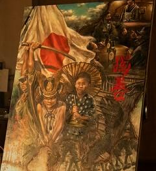
2. Explain this Painting.


This surrealist painting appears to be inspired by the ukiyo-e artists of Japan's Edo period "floating worlds" of sensual pleasure and living for the moment. The central figure's glazed, unfocused eyes symbolize complacent indulgence in those fleeting delights. The draped fabric suggests being enshrouded in such ephemeral pursuits. However, the sailing ships on the horizon serve as a wake-up call - cautioning against myopic immersion at the cost of overlooking greater possibilities on life's broader horizons beyond the pleasure districts' insular realm. A thoughtful reminder to celebrate beauty, but maintain perspective.


3. What is the significance of the word "you" in the novel?


In "An Artist of the Floating World," the use of "you" is significant as it reflects Masuji Ono's introspection and attempts to reconcile his past actions with his present understanding. Ono addresses his reflections to an unidentified "you," which draws readers into his personal journey and moral dilemmas. This narrative device creates intimacy and engages readers in Ono's self-examination, particularly regarding his involvement in wartime propaganda. The use of "you" also highlights Ono's complex relationships, such as with his deceased wife and estranged daughters, conveying feelings of guilt, regret, and longing. Moreover, it captures cultural nuances in Japanese communication, adding depth to character development and thematic exploration. Through this subtle linguistic choice, Kazuo Ishiguro invites readers to delve into Ono's world and contemplate the intricacies of memory, responsibility, and cultural identity.


4. What do you understand by ‘Unreliable Narrator’?


An "Unreliable Narrator," coined by Wayne C. Booth, presents a narrative where the narrator's credibility is doubtful. This technique involves distortion, omission, or fabrication of information, making readers question the story's accuracy. It adds complexity by forcing readers to discern between stated facts and the narrator's biases. Unreliable narrators, intentional or not, challenge perceptions, create suspense, and explore subjectivity. Ultimately, they emphasize the intricate link between storytelling and truth, urging readers to critically analyze narratives.


5. The Art and the Artist: How is this concept explored in the novel? [Key: How Masuji’s father, Master Takeda - a business owner, Chisu Mastuda – a nationalist friend and Seiji Muriyama - teacher consider the role of art? Mention it in a few words. Do not write lengthy answer]


In the novel, Masuji's father perceives art primarily as a commodity, essential for sustaining his business. Chisu Mastuda regards art as a potent instrument for propagating nationalist ideals and fostering patriotism among the masses. Seiji Muriyama sees art as a powerful medium capable of stirring emotions and sparking societal transformation. Each character's perspective on the role of art reflects their unique values and objectives within the narrative, contributing to a nuanced exploration of the relationship between artists and their creations. Through these varied viewpoints, the novel delves into the multifaceted nature of art and its influence on individuals and society.


6. Which theme according to you is the central theme of the novel? [Just mention the theme. No need  to write in detail about it]


Some potential themes in the novel could include

1. The role of art in society
2. Nationalism and identity
3. Family and tradition
4. The pursuit of excellence and perfection
5. Power dynamics in the art world
6. The conflict between commercialism and artistic integrity
7. Individualism vs. collective values
8. The impact of war and political upheaval on artistic expression
9. Personal sacrifice for artistic passion
10. The nature of creativity and inspiration.


Thursday, 21 March 2024

Auden's Poems | Worksheet

 Introduction


This worksheet  involves using ChatGPT, an advanced language model, to examine and interpret W.H. Auden's poem "September 1, 1939." Auden composed this poem in reaction to the onset of World War II, expressing his disillusionment with the prevailing political and social conditions. By leveraging ChatGPT to delve into the poem's themes, language, and imagery, the goal is to enhance comprehension of Auden's intended message and the historical backdrop against which the poem was crafted.


Worksheet-1

Using ChatGPT to analyze Auden's poem "September 1, 1939"


W.H. Auden's poem "September 1, 1939" is a poignant response to the outbreak of World War II, reflecting the poet's contemplation of the political and social upheaval of the time. Auden specifically addresses the invasion of Poland by the German Nazi party, conveying his disillusionment with society and humanity's inclination towards violence. The poem delves into themes such as fear, isolation, and the quest for meaning amidst chaos, ultimately urging readers to engage in introspection and reject the forces that perpetuate conflict and oppression. Auden's work is structured into ten-line stanzas without a strict rhyme scheme, utilizing enjambment and varying line lengths to create a rhythmic flow that propels readers through dense imagery and complex ideas.

Furthermore, "September 1, 1939" serves as a profound expression of Auden's personal beliefs and values. He critiques the destructive ideologies of nationalism, fascism, and totalitarianism while championing individual freedom and human dignity. Ultimately, the poem underscores Auden's dedication to confronting injustice and grappling with the intricacies of the human experience through the medium of art and literature.


Worksheet - 2

W. H. Auden's poem "1 September, 1939"


1. What is the setting of the poem?


"September 1, 1939" by W.H. Auden is set in landscape of  New York City, particularly Manhattan, on the day World War II began. Auden wrote the poem while in New York, capturing the city's mood amidst the global context of the war's onset. It delves into political and social concerns, such as the rise of fascism and the impending conflict, while contemplating the human condition and the world's state at that time.


2. What is the mood of the poem?


The mood of "September 1, 1939" by W.H. Auden is somber, reflective, and contemplative. The poem evokes a sense of despair, disillusionment, and uncertainty, reflecting the anxiety and fear prevalent during the outbreak of World War II. Auden's contemplation of political turmoil, societal unrest, and human nature contributes to the overall mood of melancholy and introspection.


3. What is the significance of September 1, 1939, in the poem?


September 1, 1939, signifies the start of World War II as Nazi Germany invaded Poland. W.H. Auden employs this date to contemplate the profound impact of war on humanity, reflecting on political ideologies and the chaos they breed. The poem uses this historical moment to explore broader themes of societal turmoil and the search for meaning in turbulent times.


4.  What is the theme of the poem?


The theme of "September 1, 1939" by W.H. Auden encompasses a range of complex ideas, including the destructive nature of war, the disillusionment with societal structures, the struggle for individual identity and purpose, and the search for hope and redemption amidst despair. Auden explores these themes through the lens of historical events, personal introspection, and philosophical inquiry, inviting readers to reflect on the human condition and the enduring relevance of these themes in any era marked by conflict and uncertainty.


5. What is the role of history in the poem?


In "September 1, 1939" by W.H. Auden, history serves as the backdrop against which the poem unfolds, with references to significant events like the outbreak of World War II. Auden uses historical context to explore broader themes such as human nature, societal upheaval, and the search for meaning. His engagement with history critiques contemporary society and politics, urging readers to learn from the past.


6. Explain the line "We must love one another or die."


The line "We must love one another or die" in "September 1, 1939" by W.H. Auden is saying that we need to care for each other to survive. Auden believes that without love and unity, we risk destroying ourselves. He thinks it's important for people to understand and support each other, especially when life gets tough. The line reminds us that if we don't come together with kindness and compassion, we could face serious consequences. Overall, it shows that the poem's main idea is about finding hope and connection in difficult times.


7. What is the significance of the "Ironic points of light" in the poem.


The phrase "ironic points of light" in the poem "September 1, 1939" by W.H. Auden refers to the lights in the city, like neon signs and streetlights. They provide brightness but also carry a sense of contradiction. Despite offering hope and beauty, they may also symbolize the artificiality of urban life and the contrast between human achievements and folly. Overall, they represent both hope and disillusionment in the human experience.


8. Write explanation on any one stanza of the poem. 


"Defenceless under the night
Our world in stupor lies;
Yet, dotted everywhere,
Ironic points of light
Flash out wherever the Just
Exchange their messages:
May I, composed like them
Of Eros and of dust,
Beleaguered by the same
Negation and despair,
Show an affirming flame."


In these lines from W.H. Auden's "September 1, 1939," the speaker reflects on a world filled with vulnerability and confusion, yet amidst this darkness, there are glimpses of hope, akin to unexpected lights shining through. These lights symbolize individuals who, despite the bleakness of their circumstances, maintain a rebellious spirit. They act as beacons, connecting with one another through their ideas and actions. These "ironic points of light" signify acts of kindness and courage by good-hearted people. The speaker desires to emulate them, even in the face of adversity, aiming to spread hope and positivity. This highlights the resilience and strength of individuals during challenging times.

For further understanding of the poem kindly go through these videos,  


Thank you.

Wednesday, 20 March 2024

"1984" Film Adaptation Screening Worksheet

 Introduction


George Orwell's dystopian novel "1984" has been adapted into several films. In this screening worksheet, we will be watching one of these adaptations and analyzing how it differs from the novel. Please answer the questions below as you watch the film.  


Worksheet - 1

                                                             Worksheet - 2

Pre-Screening Tasks


1.  Have you read the novel "1984" by George Orwell? If yes, what did you think of it? If no, what do you know about the story?


No, I have not read the novel, but I know the storyline,

The story is set in a dystopian state of Oceania, where a powerful figure called Big Brother controls everything and watches everyone. People have no privacy, and their lives are very controlled. Winston Smith, the protagonist, works for the government in a job where he changes historical records to fit Big Brother's narrative. He falls in love with a woman named Julia, which is not allowed in their society. Meanwhile, Winston  meets a man named O'Brien, whom he believes is against Big Brother, but O'Brien is actually a spy for the government. Eventually, Winston is arrested for his rebellious thoughts and his love for Julia. He's tortured by O'Brien until he gives in and starts loving Big Brother instead.


2. Have you watched any adaptations of "1984" before? If yes, which ones and what did you think of them? If no, what do you expect from this adaptation?


I expect that the movie which is based on "1984" to show a scary world where the government controls everything, and want to see how people have no privacy and can't express themselves freely.  Also want to see the main character, Winston Smith, dealing with these challenges, where even thinking the wrong thing can get him in trouble. How the love story between Julia and Smith is captured. Most significantly I am eager to watch the character of O'Brien, and how the torture scenes are carried out in movie. Moreover, the impact of Big Brother on everyone's day to day life would be interesting to watch. 


3.  What themes or ideas do you think are central to "1984"? Why?


Themes like Totalitarianism, surveillance, psychological torment, language and thought control, manipulation, truth and reality are the expected themes to be central in the "1984". 

These themes are central to "1984" because they portray a dystopian society ruled by the oppressive Party. Totalitarianism shows extreme government control and suppression of freedoms. Surveillance depicts constant monitoring, instilling fear and suspicion. Psychological torment reveals the Party's ruthless methods to maintain power. Language manipulation restricts expression and shapes perception. Manipulation, truth, and reality show how the Party distorts truth and suppresses dissent. Together, these themes warn against authoritarianism and emphasize the need to defend liberty and truth.


Screening Task


1. As you watch the film, take note of any major differences from the novel. How do these changes affect the story?


While the film adaptation of "1984" directed by Michael Radford aimed to stay relatively faithful to George Orwell's novel, there are indeed some significant differences between the two:

The very starting of the movie is different in which novel begun. The opening lines sets the atmosphere of the surroundings, and describes the looks of Big Brother and Winston Smith. 

Character portrayals: In the novel, characters like Winston Smith and Julia are depicted with more depth and internal conflict, whereas the film may simplify their characters due to time constraints.

Omission of certain scenes: Due to the constraints of film length and pacing, some scenes from the novel are omitted or condensed in the film adaptation. This includes some of the scenes depicting Winston's memories of his past, his interactions with the shopkeeper Mr. Charrington, and the detailed explanation of the Party's ideology.

Alteration of the ending: While the film retains the grim tone of the novel's ending, there are some differences in how it is executed. The film's ending is more overtly tragic and emphasizes the hopelessness of Winston's situation, whereas the novel leaves some room for interpretation regarding Winston's ultimate fate.

Visual interpretation: The film's visual representation of the dystopian world differs from individual readers' imaginations. Some aspects of the setting, technology, and the Party's control may be portrayed differently in the film than how readers envisioned them while reading the novel.

Emphasis on certain themes: While both the novel and the film explore themes such as totalitarianism, surveillance, and the loss of individual freedom, the film may emphasize certain themes more than others or interpret them in a slightly different way.

Dialogue changes: Adaptations often necessitate changes in dialogue to fit the medium of film and to enhance dramatic impact. While the film tries to retain key lines and themes from the novel, there may be alterations or additions to dialogue for cinematic effect.

Character motivations and relationships: Some nuances in character motivations and relationships may be lost or altered in the transition from page to screen. The film may simplify or streamline certain aspects of character development and relationships for clarity and pacing.

Differences between Orwell's "1984" and Radford's film affect the story and viewer perception. Simplified characters lose depth, omitted scenes create gaps, altered ending shifts themes, visual interpretations vary, emphasized themes differ, dialogue changes affect engagement, and shifts in character dynamics reshape the narrative.


2. How does the film's visual style and cinematography contribute to the story? What mood or tone does it create?


The film adaptation of George Orwell's "1984" employs a somber and bleak visual style to effectively capture the dystopian atmosphere of the narrative. The movie opens with people watching a film on a massive telescreen, followed by their chanting of "BB...BB...," establishing a tone of control and surveillance throughout the story. This scene underscores the notion that individuals are compelled to conform, regardless of their personal preferences. Furthermore, the film's visual style and cinematography skillfully reinforce the overall ominous and dystopian tone. Notably, the use of color contrast, predominantly featuring grey and dark backgrounds, complements the portrayal of Oceania's dystopian society.


3. Compare the portrayal of the main characters in the film to your mental image of them from the novel. How are they similar or different?


The film adaptation of "1984" emphasizes the psychological depth of characters like Winston Smith and O'Brien, capturing their internal struggles and conflicts effectively. While the film explores themes of power and manipulation, some nuances from the novel may be simplified or omitted due to narrative constraints. Overall, while the film delves into the characters' psychological dynamics, it may not fully capture all the complexities present in the original text. Film may not fully capture the complexities of Winston Smith's internal thought processes and philosophical reflections, as well as the subtle nuances of O'Brien's character motivations. 


4. What elements from the novel did the film adaptation include or exclude? Were there any major plot points that were left out?


The film adaptation of "1984" captures the novel's key elements but simplifies certain aspects due to time constraints. It portrays the oppressive society, surveillance by telescreens, Party control, Winston's rebellion, and his relationship with Julia. However, it condenses interactions with characters like Syme's role and Parsons family dynamics and omits scenes from Winston's past memories and his time in the Ministry of Love. Despite capturing the novel's themes, the film doesn't delve deeply into its philosophical and political complexities. Overall, while it captures Orwell's essence, some details are sacrificed for screen adaptation.


Post-screening Task


1. What do you think are the strengths and weaknesses of this film adaptation? How does it compare to other adaptations of "1984"?


Movie's Strength lies in its Psychological Portrayal of the Character:- 

The 1984 movie faithfully captures the essence of George Orwell's novel, particularly in its portrayal of the psychological aspects of characters like Winston and O'Brien. It delves into the depths of their inner struggles and the manipulation they face within the oppressive society of Oceania. The gloomy atmosphere created by stark visuals effectively emphasizes the constant surveillance and control that permeate their lives. John Hurt's portrayal of Winston Smith and Richard Burton's performance as O'Brien stand out, bringing depth and emotional impact to their characters, thereby enhancing the overall storytelling experience.


Weaknesses of the Movie 

Critics have contended that the temporal pacing of the film adaptation lacks consistency, with discernible fluctuations between overly brisk sequences and protracted ones, resulting in potential disruptions to narrative cohesion and viewer engagement. While the cinematic rendition adeptly encapsulates the overarching themes of Orwell's seminal work, it occasionally tends towards oversimplification or neglect of the intricate political and philosophical underpinnings inherent in the original text. Moreover, the exigencies of condensing a voluminous literary source into a feature-length film pose challenges in affording secondary characters adequate developmental arcs. Consequently, peripheral figures may suffer from a dearth of exposition, diminishing the efficacy with which their actions and interpersonal dynamics are conveyed within the cinematic narrative framework.


Comparison With Other Adaptation 

The 1984 film adaptation is frequently juxtaposed with other renditions of Orwell's novel, such as the 1956 BBC television adaptation and the more recent 2019 stage adaptation. Each iteration possesses distinct merits and drawbacks, yet the 1984 film is commonly lauded for its fidelity to the source material and striking visual aesthetics. Nevertheless, certain viewers may favor alternative adaptations for their unique interpretations or comprehensive exploration of specific themes. Ultimately, determining the superior adaptation remains subjective and contingent upon individual inclinations towards storytelling techniques, adherence to the original text, and other pertinent considerations.


2.  How successful was the film in conveying the central themes and ideas of the novel? Were there any aspects that the film failed to capture?


The "1984" movie did a good job showing the main ideas from the book, like the oppressive society and the struggles of the main character, Winston. However, it missed some important parts, like explaining Newspeak, which limits freedom of thought. Also, it might have simplified some of the deeper ideas from the book. Some characters and storylines were probably cut short because of time limits, which could've made the movie less detailed. Overall, while it got a lot right, there were some things it could've done better.


3. What is your overall impression of the film? Would you recommend it to others? Why or why not?


Overall, my impression of the film adaptation of "1984" is positive. While it may not be entirely faithful to the novel and omits certain scenes, it effectively captures the overarching message of the novel, particularly concerning the psychological torment experienced by characters like Winston and O'Brien. The portrayal of the oppressive society of Oceania, the themes of government control and individual rebellion, and the psychological struggles faced by the protagonists are all compelling aspects of the film.

I would recommend the film to others, especially those interested in dystopian themes and thought-provoking narratives. Despite its flaws and deviations from the source material, the film offers a visually striking and emotionally engaging interpretation of George Orwell's classic novel. It serves as a thought-provoking exploration of totalitarianism, surveillance, and the consequences of unchecked power. Additionally, the performances of the cast, particularly John Hurt as Winston Smith and Richard Burton as O'Brien, add depth and authenticity to the characters, enhancing the overall viewing experience.


Thank you.


Sunday, 10 March 2024

Indian Aesthetics

Indian Aesthetics 


This blog is a response to the exploration of Indian Poetics and the Rasa theory. In this unit, we benefit from expert lectures by Vinod Joshi, a respected Gujarati poet, critic, and professor.

Indian Poetics is among the oldest, with its roots in the Rasa Theory introduced by Bharatmuni in the monumental "Natyashastra." It categorizes the world into two aspects: conviction and opinion.


In Indian Poetics we found six distinct schools or theory 

  • Rasa Theory by Bharatmuni 
  • Dhvani Theory by Anandvardhan
  • Vakrokti Thoery by Kuntaka 
  • Alankara by Bhamah
  • Riti Theory by Vaman 
  • Auchitya by Ksemendra 


Rasa Theory 


Bharat Muni explained the theory of Rasa in the ancient Sanskrit text Natyashastra, focusing on the art of drama or Natya. Although the idea is rooted in this text, its most comprehensive exploration in drama, songs, and other performance arts can be found in the writings of the Kashmiri philosopher Abhinavgupta. 

Emotions or "Rasa" originate from our life experiences, are stored in our minds, and are triggered when we read or watch a play.


સાહિત્ય જ આપણી ભાવસૃષ્ટિને વિચારસૃષ્ટિમાં ફેરવે છે.


  विभावानुभाव व्यभिचारी संयोगाद्र रस निष्पति :

According to Vinod Sir,


We can suppress our emotion but we can not altogether escape from it, and human emotions are the only pure thing in the universe, and this emotional world is the purest. 


"ભાવ સૃષ્ટિ એ પૂર્ણરૂપે શુદ્ધ છે."


Bhav is something that is independent and abstract, we can only feel. We can expresses these emotion through action in form of love, anger, and kindness. Emotion are known only to individual, he/she can only what they are feeling. Emotions are complex and are reaction of action. 

One of the major difference between Western Poetics and Indian Poetics is that, Western talks about How, and Indian Poetics talks about What. Indian Poetics tent to go into the roots.


There are nine Rasa in Indian Poetics, 

  1. Shrungar Rasa (Love)
  2. Karun Rasa (Compassion)
  3. Veer Rasa (Heroic)
  4. Raudra Rasa (Anger)
  5. Hasya Rasa (Laughter)
  6. Bhayanak Rasa (Horror)
  7. Bibhatsa Rasa (Disgust)
  8. Adhbhut Rasa (Wonder)
  9. Shanta Rasa (Peace or Tranquality)

We feel the essence of the Rasa, not Rasa it self. For Example, we remember jealousy but forget Lago from Shakespeare's play Othello, and if we take example from Sanskrit, we remember the love between King Dushyant and Shakuntala not the character. This how Rasa appeals to our mind and hard. 


Bharatmuni's definition of Rasa Nishpatti, 


" Vibhavanubhava- Vyabhicari - Samyogad Rasa-Nispattih"


Rasa can be further divided into three parts, 

  1. Vibhav
  2. Anubhav
  3. Vyabhichari Bhav

And combination of these three give us Rasa, this is the reqson behind the every emotion we feel. 


ભાવ ના આગળ જતા બે પ્રકાર પડે છે.


સ્થાયી ભાવ અને સંચારી ભાવ.


સ્થાયી ભાવ: નવ રસ એ સ્થાયી ભાવ છેં. આ ભાવો હંમેશા રહે છે.


સંચારી ભાવ: આ ભાવ એવા છે જે ક્ષણિક હોઈ છે, તેને આપણે ભાવો નો આવેગ કહી શકીએ. આ ભાવો આસ્થાયી હોઈ છે.

ઉપરાંત એક બીજો પ્રકાર પણ પડે છે જે સાત્વિક ભાવ તરીકે ઓળખાય છે. આ ભાવો પ્રગટ થતા નથી પરંતુ ખબર પડે છે.


Between all this Vinod Sir said one interesting thing that, 

"In Sanskrit, the overall meaning of a sentence is not significantly affected by jumbling its parts due to the language's flexibility in word order."


"After Bharatamuni presented his Rasa theory, four scholars emerged, each offering their distinct opinions and perspectives on the concept."

Bhatt Lollatt: Bhatt Lollata argues that rasa is not inherent but rather produced. This concept, known as 'ઉત્પત્તિવાદ' (Utpattivada), is attributed to his viewpoint.


Shree Shankuk: Shree Shankuk argues that rasa neither exists nor is produced, but rather, it can only be supposed. This concept, attributed to Shree Shankuk, is known as 'અનુમતિવાદ' (Anumativada), and it involves four types of suppositions.


Bhatt Nayak: Bhatt Nayaka argues that rasa does not inherently exist, nor can it be produced or supposed. Instead, it is experienced or simplified. According to him, the realization of rasa occurs when it is expressed by the performer, and it is then perceived by the audience through observation of the performance.


Abinavgupta: He contends that the generation of Rasa occurs when both the Nat (performer) and Nati (audience) collectively anticipate the Bhavas (emotional states) and actively engage in them. This mutual prediction and complete involvement lead to the manifestation of Rasa.


Dhavani Theory 


This theory is proposed by Anandvardhan, in his text "Dhavanayalok". It highlights the significant emphasis on the potent power of words within a Kavya (poetry or literary work).

According to Anandvardhan,

"Dhvani: Kavyasya Atma"


emphasizes the idea that the evocative power of suggested meaning, rather than the literal meaning, is the essence of poetic expression.

Anandavardhana's Dhvani theory, crucial in literary criticism, gained prominence. Abhinavagupta elaborated on Dhvanyaloka, explaining its significance with examples from Sanskrit literature. The collaboration of Anandavardhana and Abhinavagupta overcame opposition, earning universal admiration and acceptance among later theorists.

'The beauty of poetry does not lie in literal meaning but in suggestive meaning'

Anandavardhana, unlike earlier Sanskrit rhetoricians focused on mechanical devices, introduced broad principles of poetry rooted in an understanding of human psychology. He emphasized that poetry is more than ornate language, it's about evoking emotions and suggestions. Anandavardhana's Dhvanyalok, explaining the linguistic and logical aspects of Dhvani, gained recognition as a definitive guide in literary matters. His work marked a shift in Sanskrit poetics, dividing criticism into old and new schools and laying the foundation for modern approaches.

                   તું અજાણી ભાષા, તારો કેવળ સમજુ સાદ પછી હ્રદય માં સાંગોપી ને કરુ સહજ અનુવાદ.


Let us take one example, અંધારું થઈ ગયું

This short sentence on surface/literal level means that there is no more light/electricity or night is approaching but what if I say this sentence in context of any person. Then this sentence would have a different meaning and that would be of suggesting someone's demise. So this other meaning/suggestion is our Dhavani. 

Not literal but something more suggestive/special meaning that we understand that is dhavani. And it is not directly stated in the sentence. 


સીધા અર્થ સિવાય ના પણ ઘણા અર્થ હોઈ છે એનું નામ ધ્વનિ


विभाजित लावण्यम् इव अंगनाशु ।।


As beauty adorns woman, similar way Dhavni adorns poetry. 


Moreover, Aachary Mammat talks about Shabda Shaktis,

  1. Abhidha Shakti: Abhidha is the primary power of words, forming the foundation for the other two powers. It can be described as the ability of words to convey the standard or literal meaning of an expression.
Example. બારણા બંધ means close the doors of any room. The literal meaning nothing else. 

ભૂલી જવાશે ઓ અભાગીયા
 ભૂલી જવાશે પ્રીત ની રીત 
નહિ રે ભૂલાય એક આટલું:
કોક દન કરી'તી પ્રીત

- Pannalal Patel

  1. Lakshana Shakti:Lakshana is the second power of words, known as Indication Power. It involves the external features of an expression that hint at a deeper meaning.
Example. આંખ થી આંખ મળી means to fall in love with someone. We cannot take this sentence literally. 

'ચકલી ની ચાંચ માંથી સૂરજ નીકળ્યો' means સવાર પડી not the literal sun came out from sparrow's beak. 

  1. Vaynjana Shakti: Vyanjana is the third power of words, denoted as Suggestive Power. It provides a direct meaning, yet it remains incomplete. We have to seek the meaning which is not said. 
Example. વન માં ઊગ્યો ચાંદલિયો અને મારા મન સૂરજ થઈ લાગ્યો

કાપડ ઓછું છે તો ગજવા હટાવતું,
ઝભ્ભો મારો કોલર વાળો બનાવતું 

- Madhusudan Patel


                शक्तिःकावितवबीजरूपे संस्कारविशेसप्राप्ते याम्विना काव्य न प्रसरित ।

શબ્દ શક્તિ એ કવિત્વ ના બીજ સ્વરૂપ એ છે


Dhavani

જેમાં શબ્દ અને અર્થ ગૌણ બની જાય છે અને જે પ્રતિયમાન અર્થ પ્રગટે તેને ધ્વનિ કહેવામાં આવે છે. ' 


'All the sayings are examples of use of Dhavani.'

Further Dhavani has three parts;
  • Vastu Dhavani: In Vastu Dhvani, the central focus is on thought, where one can observe and comprehend its significance.
    • ઘરમાં દીવો બળે છે રાતભર. = Simply a lamp is burning. Means Someone inside is waiting, anxious, awake 
  • Alankar Dhavani: In this type of Dhavani some Alankara (Figures of Speech) is suggested.
    • પ્રેમ તો સાગર છે, હું તો એક ટીપો.
    • માં તો વહાલ નો દરિયો (Uses of metaphor)
  • Rasa Dhavani: Not of this world, above all and most important
    • Click here for poem, You can explain this poem in brief as an example as discussed in classroom. 
  • Vastu Dhvani =idea hidden inside.
  • Alamkara Dhvani = ornament hidden inside.
  • Rasa Dhvani = emotion hidden inside.
Anandavardhana says the true soul of poetry is not in words or ideas, but in the Rasa Dhvani, the emotion that lingers after reading.

Pratiyaman Artha (Implied/Suggested Meaning/Dhavni)

  • Poetry has two kinds of meanings:

    • Laukika Artha (ordinary / conventional meaning) = what we all understand directly.

    • Alaukika Artha (extraordinary / poetic meaning) = hidden suggestion, deeper meaning.

This alaukika artha is what Dhvani theory is all about.

# Laukika Artha = Abhidha (literal) & Lakshana (secondary/indirect)

  • Abhidha = direct meaning. Example: “Lotus blooms in the pond.” = literal fact.

  • Lakshana = secondary meaning when literal doesn’t fit.

    • Eg: “The village is on the Ganga.” Literal impossible = so it means “on the banks of Ganga.”

From these two, two smaller types of Dhvani arise:

  • Alamkara Dhvani = when suggestion points to a figure of speech (simile, metaphor).

  • Vastu Dhvani = when suggestion points to an idea/thought.

# Alaukika Artha =  Vyanjana (suggestion)

  • Here, words go beyond literal/secondary and awaken Rasa.

  • Rasa Dhvani = when poetry suggests an emotional relish (Karuna, Shringara, Veer, Shanta etc.).


Pratiyaman Artha simply means,"Kahi Pe Nigahe, Kahi Pe Nishana"


Vakrokti


Vakrokri is associated with aesthetics.


According to Kuntaka, 

કાવ્ય નું જીવિત સ્વરૂપ વક્રોકતી છે

He said that, the concept of beauty was not cultivated but it lies there, it is already there.


'તને જોઈ જોઈ તોય તું અજાણી જાણે બીજને ઝરૂખડે જુકીતી પૂર્ણિમા જાજેરો ઘૂમતો તાણી'

'સાવરિયો રે મારો સાવરિયો હું તો ખોબો માંગુ ને દઈ દે દરિયો'

'પરપોટો ઊંચકીને કેડ વળી ગઈ હવે દરિયો લાવું તો કેમ લાવું'


In our world, every natural element possesses a unique curvature, adding charm to its appearance. Similarly, Vakrokti, or artistic expression, bestows charm upon language and, consequently, literature. In poetry, the emphasized or highlighted meaning is called Vakrokti. Before understanding the meanings of the lines we get the aesthetic pleasure of the verse. Sometimes these verse are so charming and beautiful that we do not bother to get into meaning. 


શબ્દો અને અર્થ ની વક્રતા દ્વારા સુંદરતા સર્જવાનો હેતુ વક્રોકતી નો છે.

'ફરકતું પડે જ્યારે ભૂરી હવામાં, ઝીણા શિલ્પ કંઈ કોતરી જાય પીછું'


Aacharya Kuntak has emphasized on Vakrokti in his text "Vakroktijivitam". 


शब्दार्थसहितौ वक्रकविव्यापारशालिनि।

व्यवस्थितौ काव्यं बन्धे तद्विदाह्लादकारिणी।।


तद्विदा:- The one who is acquainted with
ह्लादकारिणी:- Gets happiness 


There are six types of Vakroktis according to Kuntaka, 

   1.वर्णविन्यास वक्रता  
 ‌‌‌  2. पद पूर्वार्ध वक्रता  
   3. पदपरार्ध वक्रता  
   4. वाक्य वक्रता 
   5. प्रकरण वक्रता 
   6. प्रबन्ध वक्रता 


# Varna Vinyas Vakrata (Phonetic)


Varna Vinyasa Vakratā means the artistic arrangement of sounds/letters in a line of poetry.

It makes the verse sweet, musical, and beautiful to the ear. It creates rhythm and harmony (like music inside poetry) and gives aesthetic charm (śabda-saundarya = beauty of sound) even without deep meaning, the sound pattern itself feels pleasant.


Here, Vakrokti comes not from meaning but from the phonetic play of sounds. Sound arrangement itself is the “twist” that makes poetry beautiful.


Figures of Speech that Show This


Anuprasa (Alliteration): Same consonant sound repeated.


Example: “पीत पाट पर पतित पावन” → repetition of p sound.


ચાલને ચૈત્રની ચાંદની રાતમાં ચાલીએ


“She sells seashells on the seashore.” 


Yamaka (Repetition): Repetition of words/syllables for beauty.


Example: “रामो रामो रामो” → repeated word gives rhythm.


“Twinkle, twinkle little star.”


Varna Vinyasa Vakrata is beauty of sound arrangement in poetry. Works through repetition, alliteration, and musical flow of words. that makes poetry pleasant like music, even before we grasp the meaning.


#Pad Purvardh Vakrata 


The whole statement is depended on first letter. It includes stylistic choice in vocabulary, extended metaphors and power of adjectives. This is the beauty that comes when words are used in fresh, figurative, or creative ways rather than plain, routine speech.


પાન લીલું જોયું ને તમે યાદ આવ્યા


Rudhi Vichitratā (Figurative Use of Words): Using words in a sense other than the usual.


Example: “दिल पत्थर हो गया है” → Heart cannot literally be stone; figurative usage.


Paryāya (Synonyms): Using synonyms for freshness instead of repeating one word.


Example: For “water” → jal, salil, toya, payas.


“नदिया चले चले रे धारा” – Instead of only saying “pani,” words like nadi, dhara, toya enrich the imagery.


In poetry: keeps expression varied & musical.


Upacāra (Metaphorical Extension): Using a word in a transferred/metaphorical sense.


“चाँद सी महबूबा हो मेरी” → Beloved compared to the moon.


Example: “चाँद का मुँह टेढ़ा है” → Moon’s face crooked (personifying the moon with human qualities).


Viśeṣaṇa (Exaggeration / Hyperbole): Using words with extra force/qualities.


“तुम्हीं हो बंधु, तुम्हीं सखा” (You are my brother, my friend, everything).


Example: “तुम दया के सागर हो” → “You are an ocean of kindness.”


Sāmnoy (Personification): Attributing human actions to non-human objects.


Example: “समय किसी का इंतजार नहीं करता।” → Time waits for none.


#Pad Parardh Vakrata 


It includes rich variety of words, cleaver arrangement or special grammatical choices which leads to beauty and uniqueness. The whole statement is depended on a letter after any of the first letters. 


Kāl (Tense) – Creative shifts in time


Normal: “He loves her.”


Vakrata: “He loved, loves, and will love her forever.” → timeless effect.


Gujarati example: “તું હતો, છે, અને હંમેશા રહેશે.”


Case Usages – Using cases for artistic emphasis


Sanskrit/poetry often bends rules for beauty.


Example: “रामं वन्दे” (I bow to Rama) vs. “रामाय नमः” (salutation to Rama) – both convey reverence but the change in case gives variety.


Number: Singular/Plural – Using plural for grandeur, singular for intimacy


Example: “हम” (we) instead of “मैं” (I) in royal speech → plural gives majesty.


Kings say “हम फ़रमान सुनाते हैं” instead of “मैं कहता हूँ”.


Gujarati: Saints often use plural “આપણે” to include intimacy and humility.


Paryāya (Synonyms) – Using many words for richness


For “love”: prem, sneha, anurāga, bhakti.


Instead of repeating one word, synonyms give freshness.


Upagraha (Minor embellishments) – Tiny tweaks that add sweetness


Adding particles, euphonic sounds.


Example: instead of “aankh”, saying “naina” = softer, more lyrical.


# Vakya Vakrata (Sentential Figurativeness)


Vakya Vakrta means a charming sentence. It is the figurative twist, rhythm, grace, and depth that makes a sentence more than just plain communication.  Like a painter’s brushstroke, the sentence shines because of how it is said, not just what is said. It is simple yet impactful. 

  1. Permeating presence : It runs through every part of the sentence.

  2. Illusion of simplicity : Appears simple but holds depth.

  3. Figurative richness : Uses simile, metaphor, irony, paradox, etc.

  4. Aesthetic effect : Creates beauty, wonder, or emotional power.


Some Examples 

Shakespeare (Macbeth):
“Out, out, brief candle! Life is but a walking shadow…”
 Life compared to a shadow and a poor actor. It gives a tragic, philosophical depth.

Example of plain vs. Vakrata:
Plain: “Life is short.”
Vakratā: “Out, out, brief candle! Life is but a walking shadow…”


Shakespeare (Hamlet):
“To be, or not to be, that is the question.”
 Looks like a simple choice, but suggests deep existential doubt.


Shakespeare (Julius Caesar):
“You too, Brutus?”
 A short sentence, but loaded with betrayal, shock, and pain.

A miraculous description of an object
Example: “The moon is a silver lamp lit in the sky.” – simple words, but enchanting imagery.

# Prakarana Vakrata (Contextual Figurativeness)


In this kind of vakrata the charm and figurativeness that arises not from a single word or sentence, but from the entire episode, scene, or context. The situation becomes striking and memorable. 

Key Features
  1. Bhavyam Condition : Episodes must create emotional richness (fear, wonder, compassion, joy).

  2. Upapadya Navarasa : Scenes should allow scope for different rasas (tragic, comic, heroic, romantic).

  3. Usefulness of Episodes : Each scene should serve the main story (no unnecessary digressions).

  4. Avoidance of Excess : Too many episodes spoil the flow.

  5. Detailed Descriptions : Important events must be described vividly.

  6. Illustrations : Use of metaphors, symbolism, and imagery within episodes.

  7. Eloquence : Episodes should be aesthetically pleasing in narration.

  8. Sequential Order : Events should follow logically.

  9. Intersectionality : Subplots must merge meaningfully with the main plot.


Literary Examples
  • Shakespeare’s Macbeth

    • Witches’ prophecy: Sounds simple but contextually figurative (double meanings → Birnam Wood, Macduff’s birth).

    • Sleepwalking scene: Lady Macbeth’s guilt made vivid.

    • Macduff’s birth: Figurative twist in prophecy resolution.

  • Shakespeare’s Hamlet

    • Ghost scene : contextual figurativeness creates suspense and moral dilemma.

    • “Play within the play” : drama itself reveals truth indirectly.

  • Mahabharata

    • Draupadi’s disrobing: not just words, but the whole context creates karuna rasa (pathos).

    • Bhishma’s fall on the bed of arrows: context heightens grandeur and tragedy.


Prakaraṇa Vakrata simply means figurative beauty of the episode or context. Not just words, but the situation itself creates aesthetic power. Seen in prophetic twists, symbolic events, climaxes, and emotionally loaded scenes.

# Prabandha Vakrata (Compositional Figurativeness)

The whole literary work (story, drama, epic, or poem) holds figurative beauty, charm, uniqueness. It is not about a single word, sentence, or episode, but about how the entire composition is structured, retold, and given fresh meaning.

Key Aspects
  1. Transformation of Original Story

    • When poets adapt myths, legends, or epics, they add twists, variations, or fresh perspectives.

    • Example: Ramayan has many versions (Valmiki, Tulsidas, folk Ramayans) – each retells the same story with creative differences.

  2. Protagonist Enhancement

    • The central character is made bigger than life – either more virtuous, more tragic, or more flawed – to increase emotional impact.

    • Example: In Shakespeare’s Macbeth, King Duncan is shown as a noble old man (though in Holinshed’s Chronicles he wasn’t as impressive) = makes his murder look more shocking.

  3. Renaming/Retitling

    • Giving a new title or perspective changes the meaning of an old story.

    • Example: Mahabharat retellings titled “Jaya,” “Kurukshetra,” “Parva,” or even “Mrityunjay” (novel about Karna) = each new title highlights a fresh angle.

  4. Moral or Allegorical Meaning

    • The entire composition should suggest a deeper moral or message.

    • Example: Hitopadesha and Panchatantra = animal fables, but moral allegories.

    • Mahabharat = not just war, but lesson that duḥkha (sorrow) is eternal truth.

Features of Prabandha Vakrata (Kuntaka’s View)
  • Adaptation of an old story into something strikingly new.

  • Deletion of unnecessary details.

  • Expansion of minor incidents into important turning points.

  • Weaving the whole composition into an allegory of human values, morality, or philosophy.


# Vakrokti and Film Studies 

Understanding vakrokti through Vishal Bhardwaj's creative adaptation of Shakespeare's Othello: "Omkara" (2006) 

Things to observe while watching the movie. 

# Repeated sounds, rhymes, songs, musical motifs, the rhythm of a character’s speech.  The line or song phrase, who says/sings it, and how the sound creates mood. 

Example : Does the song’s rhythm create desire, menace or irony? Are there repeated sounds that make dialogue memorable?


# Listen/read for: unusual/region-specific words, insults, proverbs, local idioms. The single word (or two), who uses it, and what extra meaning it brings.

Example : Does a word immediately localize the story? Does it reveal a character’s class, caste, or attitude?


# Watch for: objects, compound words, symbolic phrases (e.g., kamarbandh, certain ritual words). The phrase/object and the scene where it is used; note its symbolic function (honour, shame, love).

Example : How does the object function beyond its literal meaning? Does it become a motif?


# Notice: lines with strange word order, rhetorical questions, pauses, covert meaning, double-entendres. The full line (or as close as possible), who speaks it, and the implied meaning.

Example : Is the sentence construction making the line ambiguous or ironic? Does it manipulate another character?


# Observe: how the film begins and the order of scenes (does it open with politics, song, violence?). One structural element (opening shot, a recurring transition) and why it sets tone.

Example : Does the opening immediately place us in a different cultural world? Is a scene placed early to foreshadow?


# How the overall plot, setting, or tone differs from Othello and why. One major adaptation decision (e.g., setting in UP gangland, marriage customs, political backdrop) and how it changes interpretation.

Example: How does changing a kingdom to a mafia-political world alter the theme of jealousy or honour?

  • Varna Vinyas Vakrata – Example of songs, sound play in dialogues.
  • Pad Purvardh Vakrata – Word choices (local idioms, slang, abuses).
  • Pad Parardh Vakrata – Symbolic phrases (e.g., kamarbandh).
  • Vakya Vakrata – Key dialogues showing manipulation or emotion.
  • Prakram Vakrata – How the opening and sequencing sets Indian tone.
  • Prabandha Vakrata – The overall adaptation: Othello = Omkara.

[Note: You are not to summarise the plot. Your job is to spot examples of the six Vakrokti types in the film and record evidence + one-line explanation for each example.]


Task: Article Writing Assignment 


Understanding the Task

You have already learned the six types of Vakrokti (sound, words, phrases, sentences, beginning/sequence, and whole composition).

Your task is to watch Omkara carefully and then write an article explaining how each type of Vakrokti is used in the film. 

This is not just a summary of the movie. It is about showing how Vishal Bhardwaj uses oblique/striking expression (Vakrokti) to adapt Shakespeare’s Othello.

Structure of the Article

Students should follow a clear structure :

1. Introduction (1–2 paragraphs)

  • Explain briefly what Vakrokti means (oblique or striking expression).

  • Mention the six types (just name them, don’t define in detail again).

  • Introduce the film Omkara as an adaptation of Shakespeare’s Othello.

  • State your aim: “This article studies how Bhardwaj uses the six types of Vakrokti in Omkara.”

2. Main Body (Six Sections)

Each section should focus on one type of Vakrokti, with examples from the film.

a) Varna Vinyas Vakrata (Sound/Phonetic beauty)

  • Explanation: Vakrokti at the level of sound (rhythm, rhyme, repetition).

  • Example from Omkara: Songs like “Beedi Jalaile” create a raw rhythm that matches the rustic setting. The sound itself communicates energy and desire beyond ordinary language. 

b) Pad Purvardh Vakrata (Word choice)

  • Explanation: Vakrokti through the choice of individual words.

  • Example: Langda Tyagi’s use of rustic idioms, proverbs, and slang instead of plain Hindi makes his speech memorable and character-specific.

c) Pad Parardh Vakrata (Compound words/phrases)

  • Explanation: Vakrokti through striking phrases or symbolic terms.

  • Example: The kamarbandh (waistband) replacing Othello’s handkerchief. It becomes a symbol of chastity, love, and betrayal in Indian culture—more powerful than just saying “cloth.”

d) Vakya Vakrata (Sentence/Dialogue level)

  • Explanation: Vakrokti through special sentence construction.

  • Example: Omkara’s suspicious dialogues to Dolly are shaped in indirect, heavy phrasing. Instead of simply saying “I doubt you,” the dialogues carry hesitation, pauses, and layers of meaning.

e) Prakram Vakrata (Beginning/Sequence)

  • Explanation: Vakrokti in how the story begins or how scenes are arranged.

  • Example: Instead of Othello’s courtly introduction, Omkara opens with a rustic political setting. This immediately transforms the mood and makes the story fit Indian reality.

f) Prabandha Vakrata (Entire composition/Plot)

  • Explanation: Vakrokti in the whole structure and adaptation.

  • Example: The complete shift from Shakespeare’s Venetian court to Uttar Pradesh’s political-crime nexus. The film retains Shakespeare’s theme of jealousy and betrayal but re-expresses it in a new cultural language.

3. Conclusion (1 paragraph)

  • Summarize: Omkara is not a copy of Othello but an oblique re-creation (Vakrokti).

  • State that Vakrokti makes the adaptation more powerful because it connects Shakespeare’s universal themes with Indian culture, politics, and emotions.


Alankara


The school of Alankara is formulated by Bhamaha, in his work 'Alankarashastra'.  Alankara is basically a figure of speech in language. Alankara means ornaments, and using of Alankara beautifies the language. Alankara is always imposed on the language. Here is a paraphrase of the statement:

While the use of  figure of speech (Alankara) is not compulsory, it is essential to employ language in a way that makes a literary work appealing and captivating. Crafting language with charm and eloquence is necessary to create an engaging and artful piece of literature.

For example, 


ન્હાયા પછી નખ જેવા કુણા
સખી, એવા છે મારા સાજણ સગુણા.


There two types of Alankara, 1. Shabdalankara 2. Arthalankara


અલંકાર કાવ્ય માં આવે ત્યારે સુંદરતા આપતો હોવો પડે

For example, 'Miles to go before sleep'


Auchitya 


The idea of appropriateness, known as aucitya, has been acknowledged in Sanskrit poetry theory since early times. Bharata, an ancient critic, extensively discussed the fittingness of speech, voice modulation, musical tones, and attire, all aligned with the emotions conveyed (Rasa and Bhava). Recognizing appropriateness as crucial, it has been deemed the key to the success of both dramatic performances and poetic creations.


Auchitya refers to the idea of appropriateness and harmony in literary works. It involves achieving a perfect balance among different elements in poetry, like words, figures of speech, suggested meaning (dhvani), and aesthetic mood (rasa). This principle ensures that each part suits the overall composition. Theorists such as Bhamaha, Dandin, Rudrata, Anandvardhana, Kuntaka, and especially Ksemendra, extensively discussed auchitya. 

Ksemendra even described it as the "life-breath" of poetry. According to him, auchitya is when everything fits harmoniously, creating a balance between primary and supporting elements. This appropriateness applies to all aspects of poetry, including language, structure, and style. In the context of evoking aesthetic experiences (rasanispatti), maintaining aucitya with vibhavas, anubhavas, and other rasa elements is crucial. Aucitya is considered essential for effectively conveying deeper meanings through literary devices.


Thank you for visiting. 


Word count: 1537
Videos: 3
Images: 2

Prompt Engineering | Worksheet

  Worksheet: Prompt Engineering with Chatbots # Learning Objective By the end of this activity, you should be able to: distinguish between a...